How to Choose the Right Hair Extensions. A Comprehensive Guide
Hair extensions are no longer just for dramatic makeovers or special events. If you want a long-lasting boost in length or volume, you can keep extensions in place for weeks or even months with very little upkeep. Many women in Dubai now choose them because they want a safe, reliable way to improve how their hair looks and feels without waiting for slow natural growth.
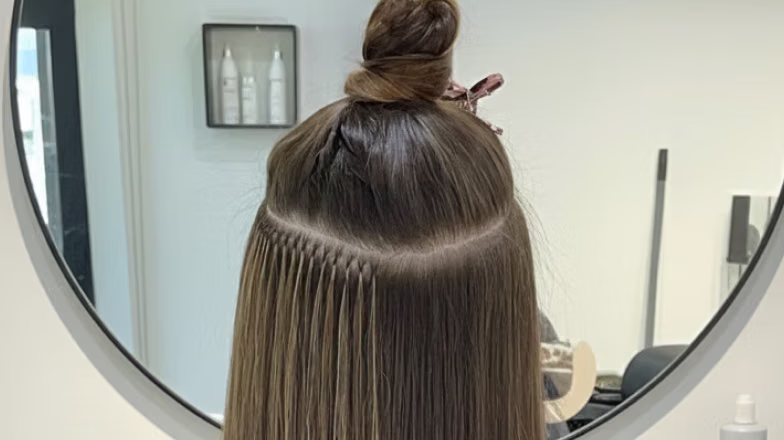
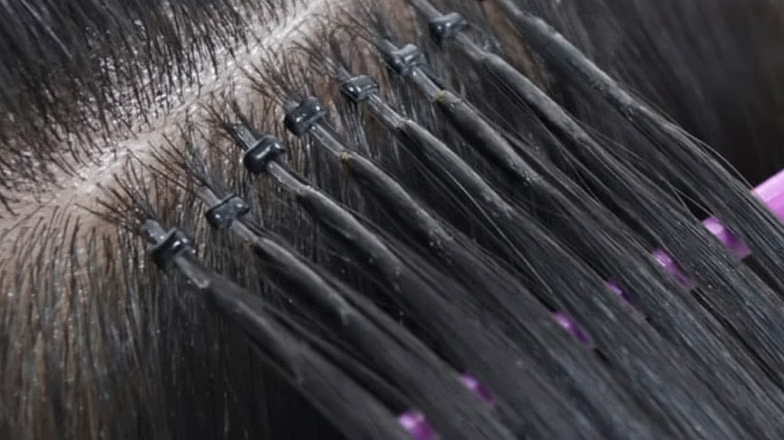
With modern keratin bonding, tiny strands are attached to your natural hair so the roots stay protected and can keep growing, especially when combined with a professional keratin treatment. You get an instant result in length, fullness, colour, or texture, and when a skilled specialist applies them, nobody can see where your hair ends and the extensions begin.
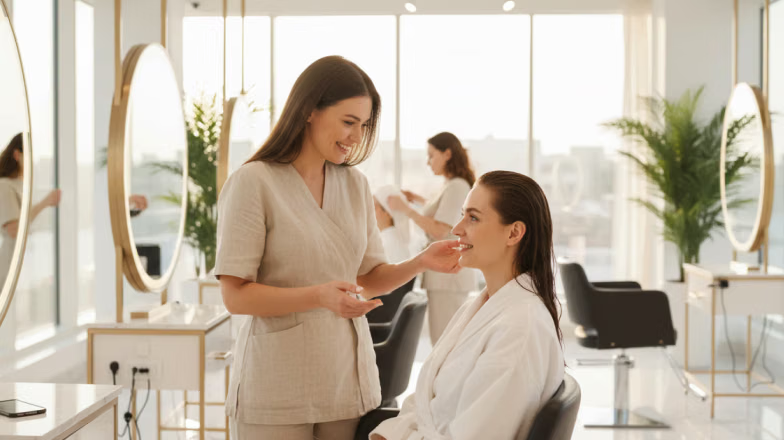
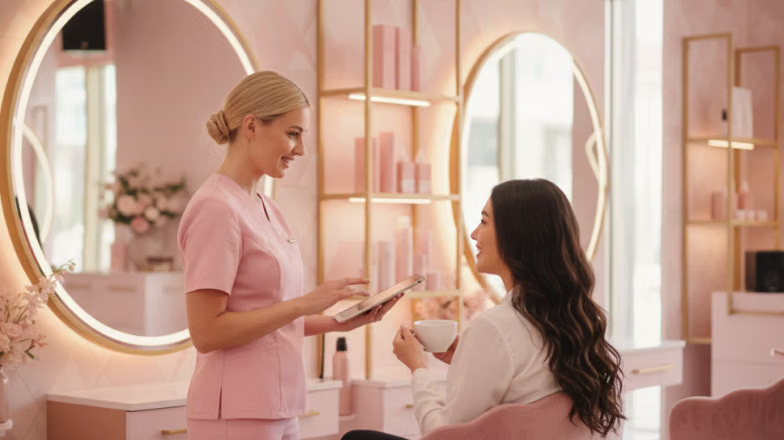
The real challenge is choosing the right studio. In this guide, Nastya Bonds, co-founder of It's Beauty, explains how you can select extensions that feel comfortable, look natural, and work for you over the long term, as part of our professional Hair Services.
Are hair extensions right for you?
If you are unsure whether extensions make sense for your hair, lifestyle, or goals, use this quick guide to see if they’re right for you:
Type of client
Why extensions help
Women with thin or fine hair
Adds volume without stressing fragile strands
Those growing their hair out
Gives length while natural hair recovers
Clients who want instant length for a big moment
No waiting, camera-ready results
Anyone curious about colour changes
Try highlights or darkening without dye
Women who want a style that lasts for months
Low maintenance between salon visits
Women dealing with post-pregnancy shedding
Safe volume during hormonal recovery
Those with uneven haircuts or patchy layers
Creates symmetry and smooth shape
Curly or coily clients who want versatility
Add texture without chemical straightening
Women who need confidence after hair loss
A discreet solution that looks natural
If any of these feel familiar, extensions might give you a result that looks effortless and holds up over time.
What are the main types of hair extensions?
The first thing you need to know is that not all extensions are created equal. Differences go far beyond length and color.
Human hair extensions are the most popular option in Dubai. They move naturally, handle heat well, and blend easily with real hair. Synthetic extensions cost less, but they behave differently and usually have a shorter lifespan.
Within human hair extensions, you will hear about:
Remy hair, where cuticles are aligned in one direction
Non-Remy hair, which is more affordable but tangles faster
Virgin hair, which has not been chemically treated
For most people, Remy hair offers the best balance between quality and maintenance. It feels soft, styles easily, and ages gracefully with proper care. It might be the best option for you, too!
Choosing the right method for your hair and lifestyle
Picking the hair itself is only half the decision. Choosing the right attachment method for you matters just as much. A technique that works beautifully for one person may be uncomfortable for another.
To make this easier, the next sections show four of the most common attachment methods. You will see how each one looks, how long it lasts, how long you spend in the salon, the strengths and weaknesses, and who it works best for.
Tape-in extensions
Tape-ins sit flat against your scalp and usually stay in place for six to eight weeks before you need an adjustment. The first appointment tends to be quick, often around one to two hours, and corrections are even faster, which is why many women with busy schedules pick this option.
Advantages
Flat and discreet
Lightweight and comfortable
Ideal for fine or medium hair
Disadvantages
Oils can affect the adhesive
Sweat and salt water may loosen tapes
Best for you if you want a natural, low-effort look and you are happy to visit the salon every couple of months.
Keratin bonds (fusion)
Keratin bonds are a longer-term solution, often lasting three to four months before removal or replacement. Application takes patience, sometimes two to four hours, and removal must be done by a professional, but the durability attracts women who do not want frequent appointments.
Advantages
Long wear
Very secure bonding
Suitable for many textures
Disadvantages
Slow application
Oils and hair masks can affect the adhesive
Needs heat for bonding and removal
Not ideal if you want frequent style changes
Best for you if you prefer a long commitment with fewer salon visits and have medium or thick hair that can carry the weight.
Micro rings
Micro rings use small metal loops instead of heat or adhesive. Installation usually takes two to three hours, and the hair can be reused. Adjustments are needed as your hair grows, but they are quicker than the original appointment, which makes this option popular with women who want flexibility.
Advantages
No heat or glue
Reusable strands
Good movement
Disadvantages
Rings may show in very fine hair
Can feel heavy if overfilled
Best for you if you like heat-free methods, want reusable hair, and have medium to thick density.
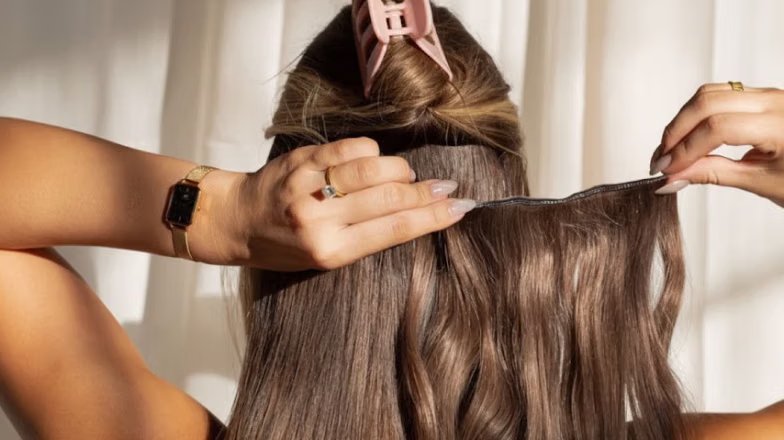
Clip-ins
Clip-ins are about convenience. You attach them yourself at home, wear them when you need them, and remove them before bed. They are not designed for showering, sleeping, or gym sessions, but they last as long as you care for them and cost nothing in maintenance time.
Advantages
No salon visits
Great for events
No commitment at all
Disadvantages
Not secure for daily wear
Can slip without correct placement
Best for you if you want length or volume on demand and do not want a permanent attachment.
Weft-in hair extensions
This method is often described as a sew-in. The stylist creates a small braid and stitches the extension weft onto it. Installation usually takes around two hours, lasts six to eight weeks, and avoids heat, glue, or metal rings, although it can add tension to very fine hair.
Advantages
No heat or adhesive
Secure and reusable
Great for thick or curly textures
Disadvantages
Not ideal for fragile hair
Can feel warm on the scalp in humidity
Best for you if you have dense hair and want something secure without glue or heat.
How to make extensions look like your own hair
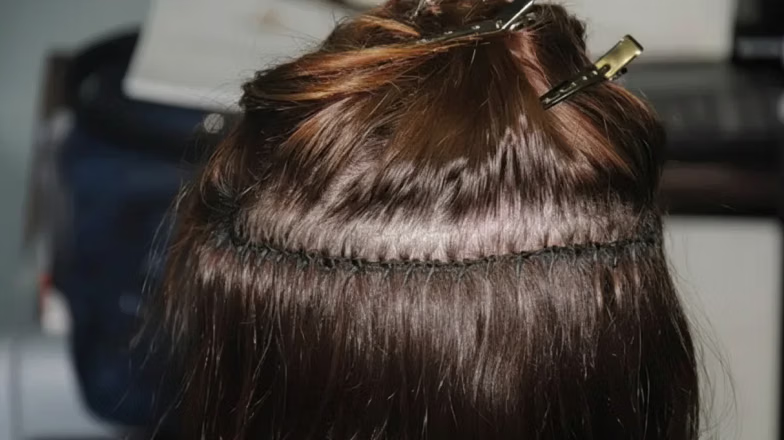
This is the point where extensions either blend perfectly or look obviously artificial. Matching colour is only one part of the process. Texture, density, and the quantity of strands all influence whether someone can see where your natural hair ends and the extensions begin. The most common giveaway is the visible transition line, where short natural hair sticks out against long added length.
Your stylist will choose the structure and shade that mimic your hair, but you still need the right volume. Some women need fewer strands for a seamless finish, while others need extra hair around the crown or sides to avoid that sharp border between natural length and added length. A good specialist studies how your hair sits when dry, how it separates when you move, and how much weight your roots can carry without stress.
Problems and Solutions
This table shows frequent problems women experience and how to solve them.
Common issue
Why it happens
What fixes it
A visible “border” between natural hair and extension length
Too much length added at once, not enough blending at the sides
Add shorter transition strands, face-framing wefts, or reduce total length
Extensions look heavy or stiff
Density does not match natural hair, too many strands used
Reduce strand count, choose lighter hair, use finer tapes or smaller bonds
Hair separates into obvious sections when you move
Not enough coverage near the crown or sides
Add filler strands in upper zones to support movement
Shade looks flat or artificial
Single-tone colour instead of blended tones
Mix several shades to recreate highlights and lowlights
Extensions are noticeable in bright light or photos
Incorrect finish near the hairline
Use ultra-fine edges, invisible tapes, or keratin micro-bonds
Ends look thin and stringy
The added hair is too long for your density
Shorten length or increase density at the ends
Waves or curls do not match
Wrong texture chosen
Select hair that mimics your natural pattern whether air-dried or heat-styled
Scalp feels weighed down
Too much volume on fragile roots
Reduce total strands and switch to lightweight methods
If you keep these points in mind and let an experienced stylist tailor coverage to your hair movement, you get a result that looks believable in every situation: natural light, gym, beach days, and weekly styling.
How to maintain your extensions
Once your extensions are in, the way you look after them makes a big difference. You want them to stay soft, smooth, and secure, and you also want your natural hair to stay healthy underneath. The good news is that maintenance is simple when you know what to do. Think of it as a few small habits that protect your investment.
Brushing
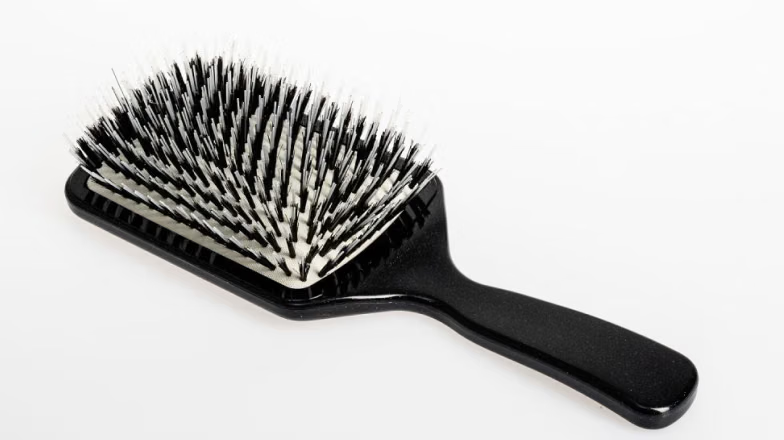
Use a soft brush or a loop brush and start from the ends, working upward with gentle strokes. You are not pulling on the bonds, you are guiding the hair. A quick brush in the morning and before bed stops tangles from building up.
Washing
You can wash your hair as normal, but be mindful of the roots. Try to avoid rough scrubbing around bonds or tapes. Squeeze shampoo through the lengths instead of twisting. When you rinse, let the water fall straight down instead of flipping your hair forward in the shower.
Conditioning
Keep conditioner away from the attachment points. Oils and softening agents can loosen tapes or micro bonds. Apply it from mid-length to ends to keep the hair hydrated and silky.
Sleeping
Never go to bed with wet hair. Tie your hair in a loose braid or a low ponytail so it does not tangle while you move at night. A silk pillowcase helps reduce friction if you want the smoothest finish.
Gym and swimming
Salt water, chlorine, and sweat can weaken adhesive methods. If you love regular workouts or swimming, tie your hair back and rinse it afterwards. After sea water or pool water, a gentle hydrating mask on the ends keeps them from drying out.
Heat styling
You can style extensions, but keep the temperature moderate. Heat is fine on the hair lengths, just avoid pressing hot tools directly onto the bonds. If in doubt, ask your stylist to show you the safest way.
Salon check-ups
Corrections are part of the process. As your natural hair grows, your stylist will move the bonds up so they sit comfortably and stay hidden. Think of this as a refresh, not a problem. It keeps everything looking natural and prevents tension at the root.
Why hair extensions are a good choice for you in Dubai
Dubai has a unique beauty culture. Clients come from diverse backgrounds with different hair types, and the UAE’s reputation for great service means that expectations of clients are very high.
Salons like It's Beauty are used to working with:
Fine European hair
Thick Middle Eastern hair
Curly and coily textures
Chemically treated or lightened hair
This means that salons will be able to pick the right solution for your hair.
This diversity has pushed salons to refine their techniques. Blending, discretion, and comfort are priorities. In modern times, extensions are expected to look polished in bright lighting and high-definition photos.
There is also a strong focus on aftercare. As a client, you’ll be given detailed routines and follow-up appointments, which helps your extensions last longer and look better over time.
Common mistakes to avoid
Most problems with extensions happen before you even sit in the chair. When you rush a decision, the outcome can look artificial, feel uncomfortable, or even stress your natural hair. These questions will help you avoid the most frequent traps.
What happens if you choose price over technique?
You may save money at first, but a poorly trained technician can damage your roots, place strands unevenly, or use low-quality bonds that slip or tangle. In the long run, you spend more trying to fix the result. A qualified stylist protects your natural hair and gives a finish you can live with for months.
What happens if you ignore maintenance?
Maintenance is not optional. If you skip simple habits like brushing, small tangles turn into matting. If you ignore washing guidance, oils can weaken your bonds. If you go to bed with wet hair, friction creates knots that are painful to remove. The message is simple: a few minutes a day prevents weeks of stress.
Is it a problem to add too much length at once?
Yes. Your natural hair has limits. If you jump from shoulder-length to waist-length in a single session, the weight sits on your roots and creates a visible line between your real hair and the new length. You may also notice movement problems: your natural hair flicks up while the extensions hang straight. A believable result usually means building length gradually or adding transition strands.
What if you skip professional removal?
Trying to remove extensions at home can tear your own hair. Keratin bonds need dissolving, tapes need safe release, and rings need to be opened correctly. A stylist removes everything strand by strand so your natural hair remains intact.
How should extensions feel when they are fitted correctly? You should feel secure, never sore. Slight tightness for a day or two is normal, but pulling, burning, or headaches are not. If anything feels uncomfortable, speak up. A quick adjustment can prevent breakage and make the whole experience easier.
When you understand these pitfalls in advance, you protect your own hair, manage your expectations, and give yourself a result that lasts.
How to make the right choice
Your hair will feel upgraded by great extensions. When chosen correctly they'll fit seamlessly into your beauty routine.
The best results come from honest consultations and realistic expectations. Over time, extensions can become part of your regular beauty routine, rather than a special occasion solution!
If you are considering hair extensions in Dubai, studios like It's Beauty offer guidance designed around your hair type, lifestyle, and long-term wear.