


Cuticle Erosion Explained. How to Prevent It Without Babying Your Hands

Cuticles can look great on Monday and frayed by Friday, and it’s not because you’re doing something wrong. It’s the environment and your day-to-day habits. Constant A/C dries the skin out, and sun and heat don’t exactly help either. Add frequent handwashing, alcohol-based sanitiser, pool chlorine, and the occasional beach day, and the thin skin around your nails doesn’t get much of a break.
Then there’s the beauty side: regular manicures and that ultra-clean cuticle finish. The problem is that when cuticle work gets a little too aggressive (too much trimming, too much e-file pressure, too often), the cuticle edge can start to thin and roughen. That’s when you see hangnails, peeling, and that always dry look that ruins an otherwise perfect set.
If you want a professional, gentle cuticle tidy-up without overdoing it, the manicure options on It’s Beauty are a good starting point.
What cuticle erosion looks like
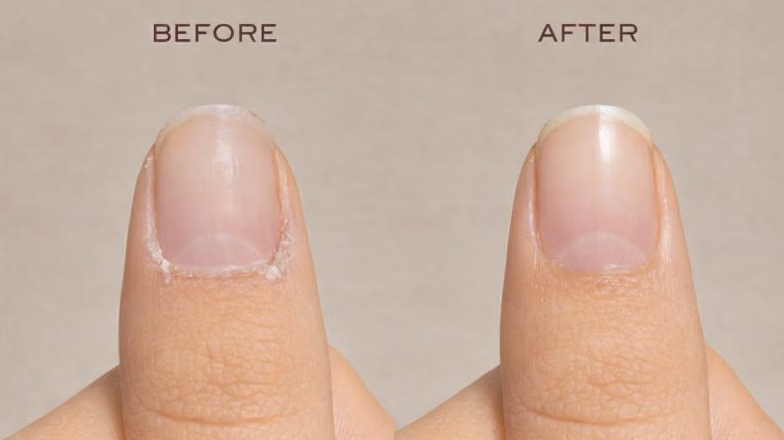
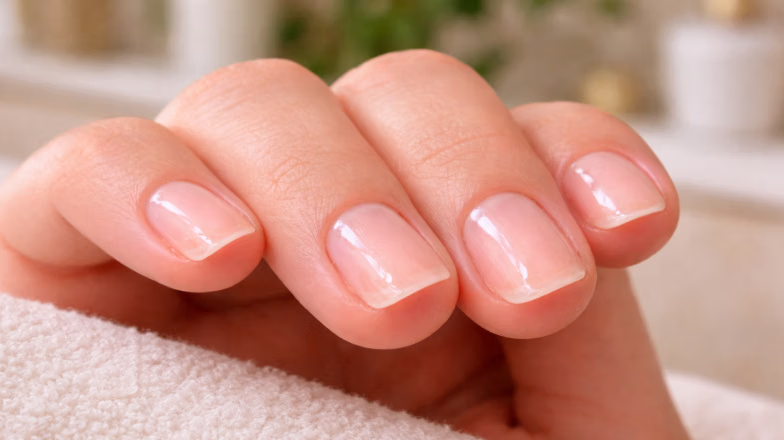
Cuticle erosion means the thin cuticle edge at the base of the nail becomes dry, patchy, or uneven. You might see hangnails, rough skin that catches on clothes, or a cuticle line that never looks smooth for long.
That little strip of skin helps protect the nail area. When it is irritated and dry, the surrounding skin flares up faster, and your manicure loses its clean look sooner.
Why it happens
Cuticle erosion builds up through repetition. The skin around the nails is delicate. It reacts to the same few stresses over and over: wet-to-dry cycles, harsh products, and overly aggressive cuticle work.
Dubai's dry air and water habits
Dubai is tough on the hands. Indoors, A/C keeps the air dry for hours. Outdoors, heat and sun pull moisture out of skin. Add salt water or chlorine, and the cuticle area can dry out fast.
Handwashing adds another layer. Water swells the skin, then the skin tightens again as it dries. Do that a dozen times a day, and the cuticle edge starts to crack and fray.
Then there is sanitiser. It is useful, but alcohol strips oils. If you use sanitiser often, the cuticles need moisture afterwards, ideally the same day.
Manicure technique also matters. A crisp, detailed cuticle finish can look amazing. But if the cuticle is trimmed too deeply or filed too hard, the area turns sensitive and flaky. It is the nail version of over-exfoliating your face: smooth for a moment, annoyed for days.