


Why Do Nail Coatings Not Adhere Properly
Why does your gel lift so quickly? Usually, it’s small details adding up: surface condition, prep technique, lifestyle habits. Let’s break it down calmly and clearly. The article is written by It’s Beauty editorial team.
In many cases, lifting is not about the product itself, but how it interacts with your natural nail. Once you understand these subtle factors, it becomes much easier to maintain a long-lasting, clean result.
What Lifting Actually Means
When a coating fails to adhere, it usually looks like: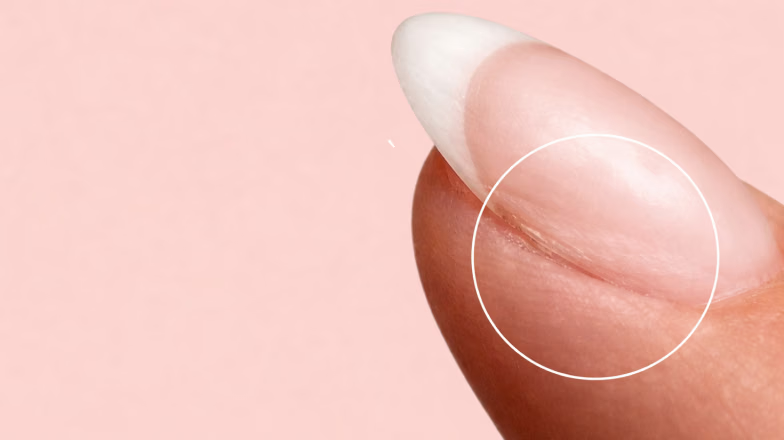
- gel separating near the cuticle;
- peeling from the free edge;
- tiny air pockets under the surface;
- chipping within the first week;
- the whole layer coming off in one piece.
If gel peels off in a single sheet, it means the coating never formed a strong bond with the nail plate in the first place. The nail and the coating never fully bonded.
That bond is everything.
Surface Matters More Than Polish
People often blame the brand. Or assume their nails are “too soft” or “too thin.”
In reality, adhesion problems almost always begin with the nail plate itself.
Dry nails can cause lifting
Very dry nails lose flexibility. So, when they bend slightly during daily movement, tiny cracks form on the surface. Gel sits on top. But underneath, the nail keeps shifting.
Natural oils can interfere
Some nail plates produce more oil. It’s completely normal.
Even a thin, invisible layer can interfere with bonding when prep lacks precision. Strong adhesion happens when the nail surface feels clean and balanced: gently dehydrated, free of oils, and ready for product.
Cuticle residue
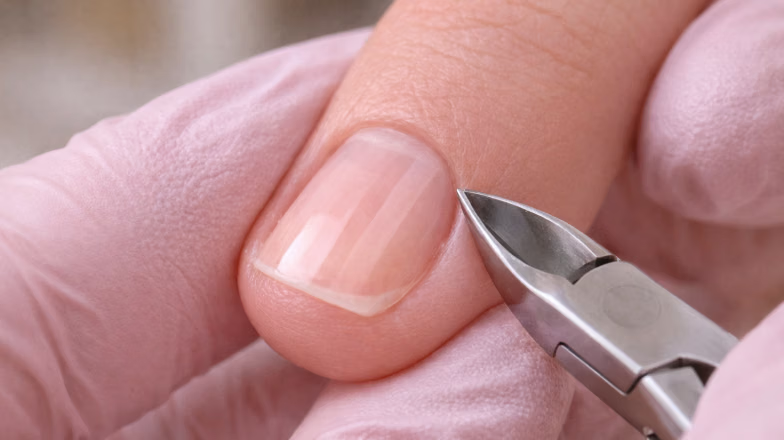
The nail may look clean, but microscopic cuticle tissue can remain on the plate. Gel cannot attach properly to that layer. Lifting near the cuticle starts here.
That’s why detailed Russian manicure prep changes the result so noticeably.
Moisture trapped inside the nail
If hands were soaked before application, or recently washed and not fully dried, moisture can remain inside the nail plate.
Over the next few days, that internal moisture expands slightly. The coating reacts.
It’s subtle. But it matters.