



Why Do Nail Coatings Not Adhere Properly
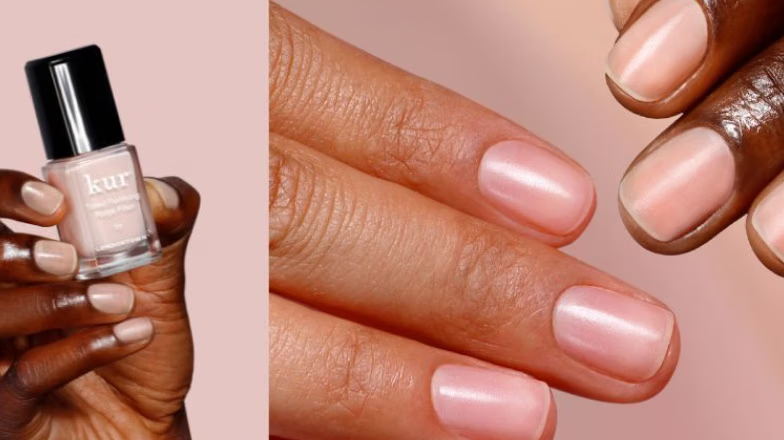
Why does your gel lift so quickly? Usually, it’s small details adding up: surface condition, prep technique, lifestyle habits. Let’s break it down calmly and clearly. The article is written by It’s Beauty redaction.
In many cases, lifting is not about the product itself, but how it interacts with your natural nail. Once you understand these subtle factors, it becomes much easier to maintain a long-lasting, clean result.
What Lifting Actually Means
When a coating fails to adhere, it usually looks like: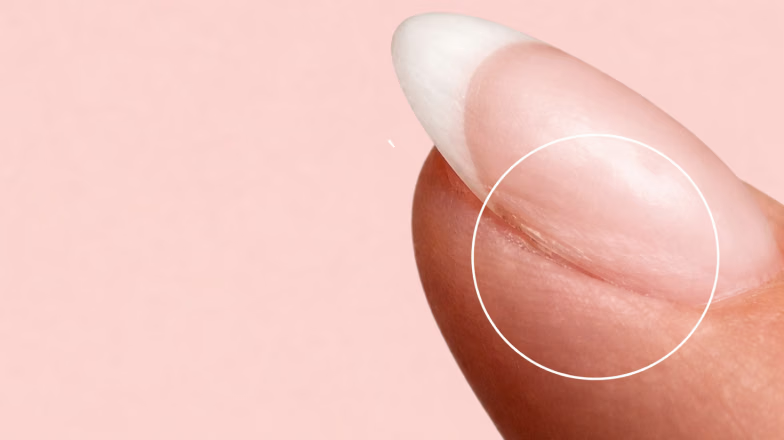
- gel separating near the cuticle;
- peeling from the free edge;
- tiny air pockets under the surface;
- chipping within the first week;
- the whole layer coming off in one piece.
If gel peels off in a single sheet, it means the coating never formed a strong bond with the nail plate in the first place. The nail and the coating never fully bonded.
That bond is everything.
Surface Matters More Than Polish
People often blame the brand. Or assume their nails are “too soft” or “too thin.”
In reality, adhesion problems almost always begin with the nail plate itself.
Dry nails can cause lifting
Very dry nails lose flexibility. So, when they bend slightly during daily movement, tiny cracks form on the surface. Gel sits on top. But underneath, the nail keeps shifting.
Natural oils can interfere
Some nail plates produce more oil. It’s completely normal.
Even a thin, invisible layer can interfere with bonding when prep lacks precision. Strong adhesion happens when the nail surface feels clean and balanced: gently dehydrated, free of oils, and ready for product.
Cuticle residue
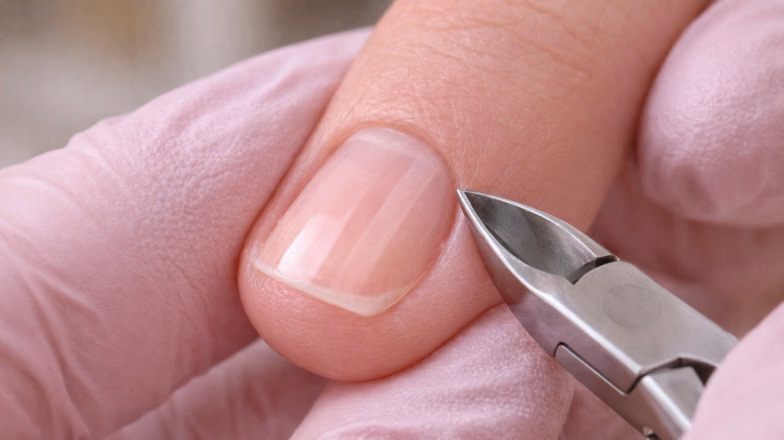
The nail may look clean, but microscopic cuticle tissue can remain on the plate. Gel cannot attach properly to that layer. Lifting near the cuticle starts here.
That’s why detailed Russian manicure prep changes the result so noticeably.
Moisture trapped inside the nail
If hands were soaked before application, or recently washed and not fully dried, moisture can remain inside the nail plate.
Over the next few days, that internal moisture expands slightly. The coating reacts.
It’s subtle. But it matters.
Dubai Habits that Affect Manicure Wear
Dubai is basically a manicure stress test. Your nails aren’t just “wearing” polish, they’re dealing with a daily mix of drying, soaking, and sudden temperature swings.
A fresh set has to survive:
- sanitiser all day (nails get dehydrated);
- pool + sea days (chlorine and salt pull moisture out, and colour can dull faster);
- long hot showers (nails swell in water, then shrink as they dry, that back-and-forth loosens product over time);
- cleaning without gloves (chemicals + friction = weak edges and faster lifting);
- outdoor heat and icy A/C (your skin feels it, your nails do too).
Here, long wear isn’t only about a nice top coat, it’s about prep that actually grips, and a product choice that can handle real life.
What Professionals Do Differently
A long-lasting manicure begins long before colour is applied.
At It’s Beauty, adhesion starts with controlled preparation.
Precise cuticle cleaning
The cuticle area is cleaned thoroughly so gel can sit flush against the base without lifting. When this step is done carefully, regrowth looks cleaner, and the wear time improves significantly.
Choosing the right base
Not every nail needs the same formula. Some nails require flexibility. Others need stronger bonding. Matching the base coat to the nail type makes a visible difference.
At It’s Beauty, the primary systems are Luxio and MAL, with additional shades from Kinetics. These formulas are known for durability when paired with correct prep.
Balanced dehydration
The nail plate is prepped just enough to remove oils and residue, without over-stripping it. If it’s dried out too much, the nail gets fragile. If prep is too light, the product won’t grip and lifting shows up fast.
How to Help Your Manicure Last Longer
Use cuticle oil every day. Wear gloves when you clean. And try not to use your nails as tools. Don’t open a soda can with your nail, don’t peel off stickers or price tags, don’t scrap something off a surface, don’t pry open a lid, don’t press tiny buttons hard (like an elevator or card reader) with the nail tip. It only feels harmless, but it puts pressure right where lifting and chips start.
After washing your hands, dry them properly (especially around the nails). Keep hot-water soaks short. Very hot water makes nails swell and then shrink, which can loosen product over time. And yes, we know that these small habits sound basic, but they often add several extra days to your manicure.
When Repeated Lifting Needs Extra Care
If gel keeps lifting despite good technique, the nail plate may need recovery. This can happen after:
- peeling off gel at home;
- overly aggressive removal;
- very thin nail structure;
- long periods without strengthening care.
In those cases, strengthening treatments or a more flexible coating system may help restore stability before returning to standard gel wear.
Takeaways
In Dubai, nails simply experience more stress than in cooler climates. That doesn’t mean long wear is impossible. It just requires thoughtful preparation and correct product choice.
If your manicure keeps peeling sooner than it should, you can explore tailored solutions at It’s Beauty and find a method that suits your nail type and lifestyle.