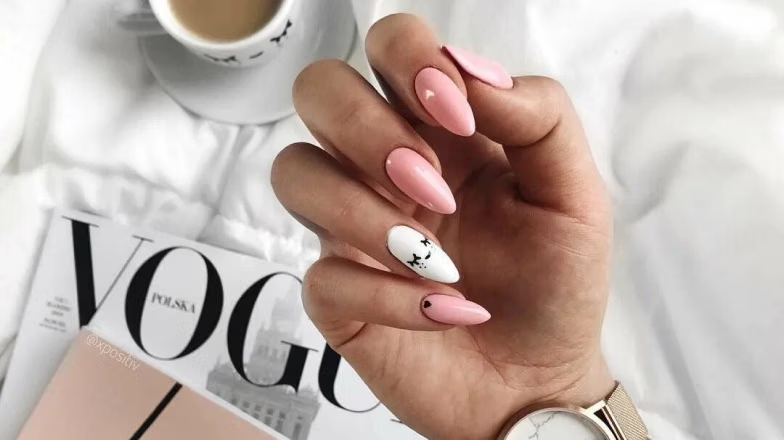
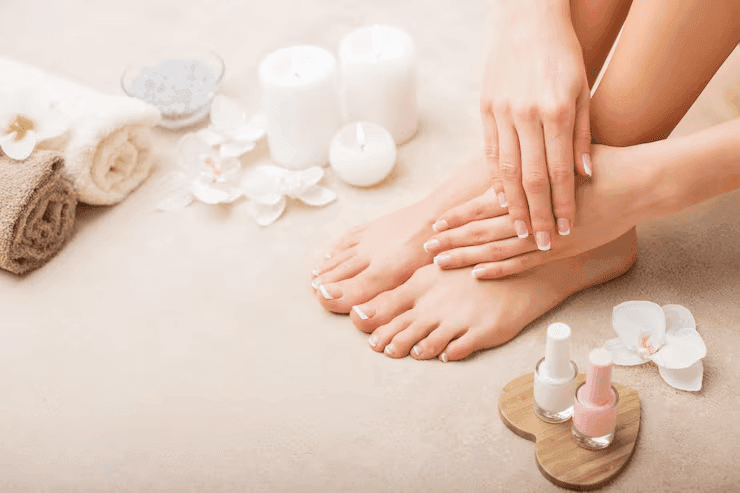
Russian Manicure: What It Is, Why It's Popular, and What to Expect at It's Beauty Salon
Russian manicure is one of the most requested nail services at It's Beauty Salon, and the appeal is pretty practical: the technique works on dry nails with an electric drill, skipping the soak-and-soften routine entirely. That changes how the finish behaves; the polished finish holds noticeably longer than a standard manicure, and for most clients, long-lasting wear of three to four weeks is the norm rather than the exception.
What Is Russian Manicure?
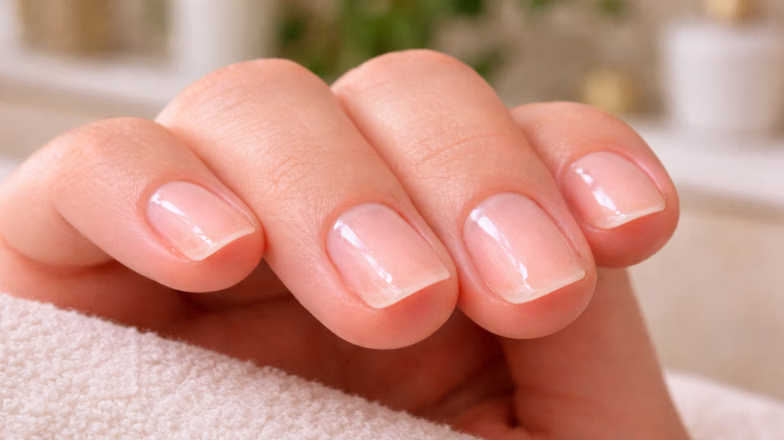
A Russian manicure is a dry, drill-based manicure technique that uses an electric e-file to clean and remove dead skin from the nail base, without soaking the hands in water at any point. The technician works with a nail bit at low speed, carefully lifting and removing the eponychium (the thin layer of dead skin attached to the nail surface) and any overgrown tissue, leaving a clean edge that scissors or a standard pusher simply can't replicate.
Russian dry manicure takes its name from Eastern European nail education, where it was standard training long before it reached salons elsewhere. The "Russian" refers to that origin, not a product range, not a brand, just geography.
How a Russian Manicure Is Done
A full Russian manicure session runs 1.5 to 2 hours depending on nail condition and the finish chosen. The steps below reflect the standard process in the salon, with no soaking bowl anywhere in it.
Nail prep. Before anything else, the technician cleans the nails and removes any existing product: gel, acrylics, or regular polish.
Base preparation. Using an electric nail drill with the appropriate e-file bits, the technician lifts and removes the pterygium: the overgrown dead skin that adheres to the nail plate. The work goes closer to the nail than scissors or clippers allow, which is exactly the point.
Nail buffing. Once the area is clean, the nails are lightly buffed to remove shine and create an even base for product adhesion.
Nail shaping. The free edge is shaped to preference: oval, square, almond, or a variation.
Product application. A base coat first, then builder gel or gel polish, then a top coat. Each layer goes on thin.
Curing. Each layer cures under a UV/LED lamp. A few minutes per layer, nothing dramatic.
The dry approach keeps the tissue firm throughout. Soaked skin moves under pressure; dry skin doesn't. That distinction matters when you're working close to the nail base with a drill.
Both deliver neat nails, but the technique, appointment length, and wear time are different enough that the two don't really compete for the same client. Here's how they compare side by side:
Feature
Russian manicure
Regular manicure
Cuticle work
Removed with a drill that cleans deep into the cuticle line
Pushed back and trimmed with cuticle pusher, scissors, or nippers
Water soaking
No — dry technique throughout
Yes — hands are soaked before cuticle work
Wear time
Up to 3–4 weeks with gel polish or builder gel
Around 1–2 weeks with standard gel
Finish look
Ultra-clean line at the cuticle, picture-perfect base
Neat, but with a visible gap near the cuticle as nails grow
Salon time
Around 1.5–2 hours
Around 45–60 minutes
Best for
Long wear, nail art, busy schedules, photo-ready finish
Quick refresh, lower budget, occasional manicure
Skill required
Specialized training in drill technique
Standard manicurist skills
The Russian manicure makes more sense when the priority is fewer visits, a cleaner finish, and a base that holds detailed designs without lifting at the edges.
Russian Dry Manicure vs Russian Gel Manicure
These two terms get mixed up constantly, and the confusion is understandable, since they sound like they're describing the same thing from opposite directions. Russian dry manicure refers to the preparation technique, meaning the dry, drill-based work on the nail base described above. Russian gel manicure means the same preparation, combined with a gel polish or builder gel finish. In practice, the two almost always go together.
"Dry" describes how the nail base gets prepared, not what product ends up on top. Most clients who book this service want the gel option, and the technician makes a specific recommendation after looking at nail condition and thickness.
BIAB (builder in a bottle) is worth knowing about if you haven't heard of it. It's become the preferred finishing product for this technique at many salons: a thin, flexible layer applied directly to the natural nail that reinforces it without adding bulk, doubles as a base coat under color, and keeps the structure stable between refills.
Benefits of Russian Manicure
Ask clients why they keep booking this service and the answers cluster around the same few things: the long-lasting wear holds, the finish looks clean further into the growth cycle, and the nails are in better condition over time than they were with regular gel. The quality of the base preparation is what drives all of it, and here's what that means in practice:
Long-lasting wear, up to 3–4 weeks. The precise preparation means the product adheres to the nail plate with minimal lifting at the edges. Chip-free color that holds through week three is realistic for most clients.
Ultra-clean cuticle line. The drill reaches areas scissors and pushers can't, so the polish sits right at the nail base with no gaps, no lifting, no ragged skin.
Healthier nails over time. Repeated acetone soaks thin and dehydrate nails. The dry technique sidesteps that cycle with each visit.
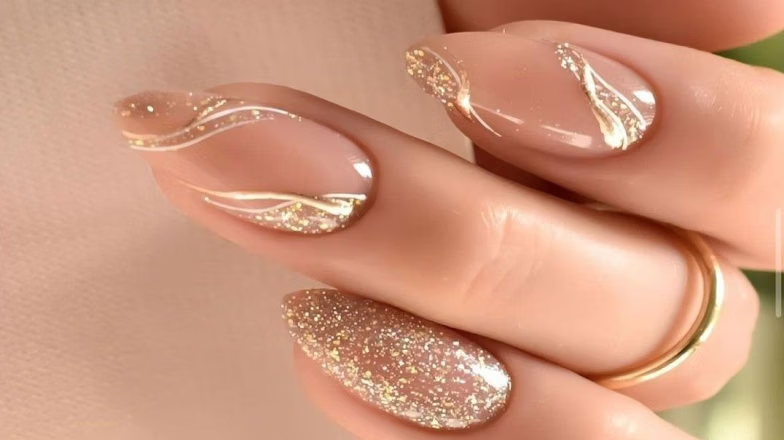
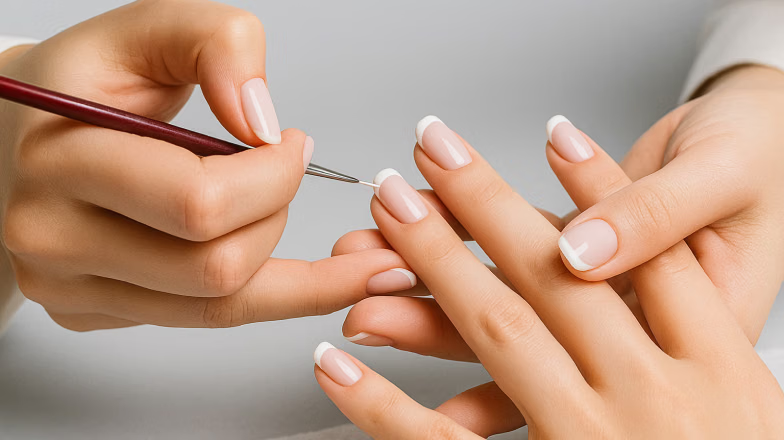
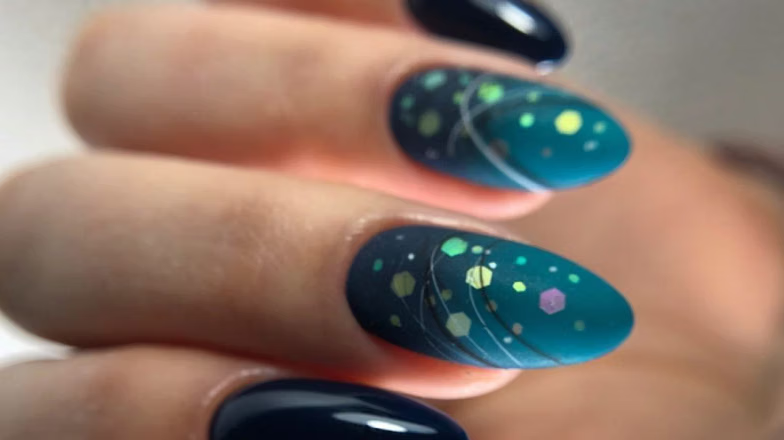
A reliable base for nail art. Chrome, French manicure details, minimalist nails, detailed nail art: everything looks sharper on a surface this clean and even.
Fewer salon visits. Three to four weeks between refills means fewer appointments to schedule.
Photo-ready from day one. The finish looks editorial right out of the chair, no adjustment period.
Is Russian Manicure Safe? Risks to Be Aware Of
Safe, yes, when performed by the right technician. The risks are real but specific, and almost all of them come down to how the work is done rather than the technique itself.
The eponychium isn't decorative. It seals the gap between the nail and surrounding skin, protecting the nail matrix from bacteria. Remove it too aggressively, at the wrong speed, angle, or pressure, and that seal breaks. This is the core risk of the Russian manicure technique, and it's entirely a function of execution.
What actually goes wrong when the technique is applied incorrectly:
Infection risk when tools aren't properly sterilized between clients or single-use consumables get reused. Non-sterile instruments are the most common route to post-manicure infections.
Pigmentation response near the nail, particularly relevant for darker skin tones. Aggressive mechanical friction can trigger melanin production in the surrounding skin, including hyperpigmentation that takes time to fade.
Over-buffing that thins the nail plate. Too much pressure during prep removes layers that take months to grow back.
Nail bed injury from a technician working too close or too fast with the drill.
The checklist for avoiding all of this is short: hospital-grade sterilization of instruments, e-file bits that are either single-use or autoclaved between clients, and technicians with verified training. At the salon, every appointment starts with a sanitization check and a nail condition assessment before anything touches your hands.
What to Expect at It's Beauty Salon
It's Beauty Salon was co-founded by Nastya Bonds, who has over a decade in the beauty industry and ran several salons in Moscow before opening the first UAE location. That background matters for this specific service: the team was trained in the technique at its source, not through a secondary certification. Russian-trained masters who learned drill technique as part of their core professional curriculum.
Every appointment starts with a consultation. Nail condition, skin sensitivity, and the desired finish are assessed before any product touches your hands. The sterilization protocol is consistent across visits, and single-use tips are used where the protocol requires it.
The salon has locations across both cities: Dubai Marina, Internet City, DIFC, Business Bay, and two Abu Dhabi branches at Al Zahiyah (Waterfront Tower A) and Al Raha Boulevard (Sail Tower). If you're already coming in for nails, it's worth asking about adding a pedicure to the same visit. For the full nail service offering, the nail salon in Dubai page covers everything by location.
A Russian manicure lasts longer than most nail services, but the gap between appointments isn't maintenance-free. A few adjustments to daily routine make a measurable difference.
Cuticle oil once or twice a day keeps the skin around the nail flexible and hydrated, which reduces lifting at the edges. It's the cheapest, easiest step between visits and the one the technicians at It's Beauty mention most consistently. Gloves for household cleaning come second; detergents break down the top coat faster than most people expect, and it takes about three seconds to put them on. A sulfate-free hand wash where possible keeps the polished finish looking cleaner for longer; harsh soaps accelerate surface wear.
The rule that matters most: if the gel starts lifting, book a removal. Peeling it off takes the top layer of the nail with it, and that kind of thinning takes months to grow out. A refill at the three-to-four-week mark keeps the structure balanced before the regrowth gap becomes a problem.
The humid Dubai climate, with its cycle of outdoor heat and air-conditioned interiors, dries out hands faster than most people expect. Daily oil is worth making a habit here specifically.
FAQ
Three to four weeks is the standard range with the right finish. The precise dry preparation creates strong adhesion at the nail, which is why lifting at the edges happens later than with a regular wet manicure.
Every three to four weeks, aligned with natural nail growth. At that point, the regrowth gap becomes visible and the product may start to lift slightly at the base. Clients with faster growth typically come in closer to three weeks; slower growers stretch to four or a bit beyond.
It shouldn't be. A correctly performed russian manicure uses the drill at low speed and light pressure; the sensation is closer to a gentle vibration than anything sharp. If anything feels uncomfortable during the appointment, say something immediately. The technician adjusts; they don't push through.
The service isn't categorically banned, but certain US states have licensing regulations that restrict cosmetologists from performing drill techniques that remove tissue near the nail base. There are no equivalent restrictions in the UAE. The underlying concern is valid regardless of jurisdiction: the technique requires proper training and hygiene standards, and that's exactly what to verify when choosing a salon.
Yes, if performed incorrectly. Over-buffing thins the nail; aggressive work near the base can damage the nail bed. Both are real risks with a drill in inexperienced hands. Performed at the correct speed and pressure by a trained technician, the procedure is safe, and for most clients gentler on the nail over time than repeated acetone soaks.
With the right technician, yes. The specific consideration for darker skin tones is pigmentation response: repeated mechanical friction near the nail base can trigger melanin production in the surrounding skin. A technician experienced in drill work with clients of different skin tones knows to adjust pressure and speed accordingly.
The tools are available, but the technique doesn't transfer without training. A drill at the wrong angle or speed removes living tissue, thins the nail, and creates micro-tears in the surrounding skin. Without proper sterilization equipment at home, the infection risk is meaningfully higher than in a professional setting. The result you get from a russian e-file manicure at It's Beauty reflects thousands of hours of hands-on practice; the drill is just the instrument.




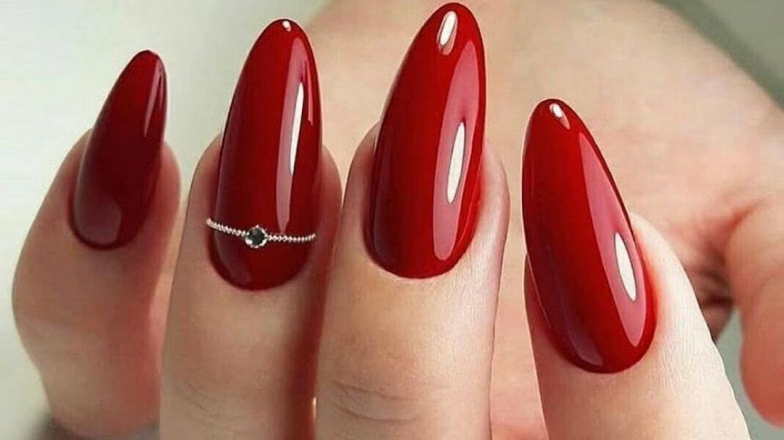
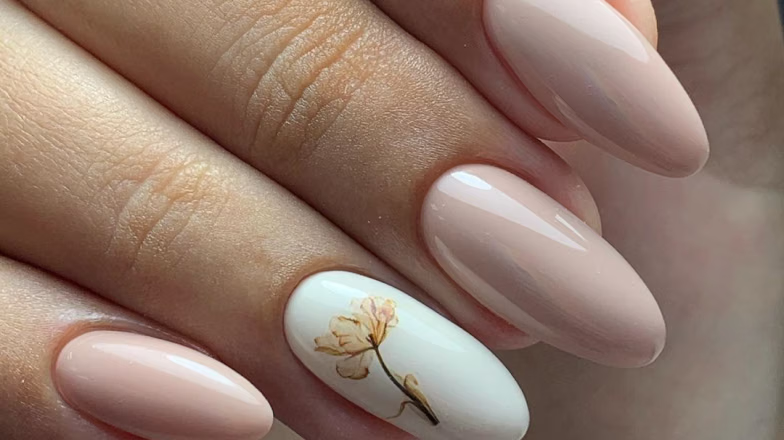 A Russian manicure is a dry, drill-based manicure technique that uses an electric e-file to clean and remove dead skin from the nail base, without soaking the hands in water at any point. The technician works with a nail bit at low speed, carefully lifting and removing the eponychium (the thin layer of dead skin attached to the nail surface) and any overgrown tissue, leaving a clean edge that scissors or a standard pusher simply can't replicate.
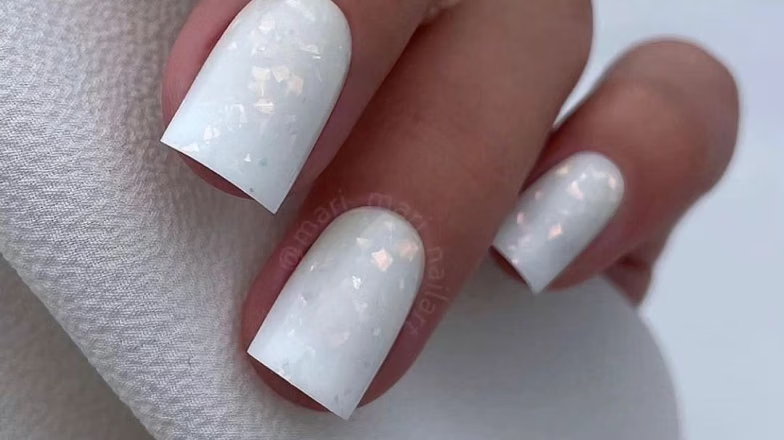 Nail prep. Before anything else, the technician cleans the nails and removes any existing product: gel, acrylics, or regular polish.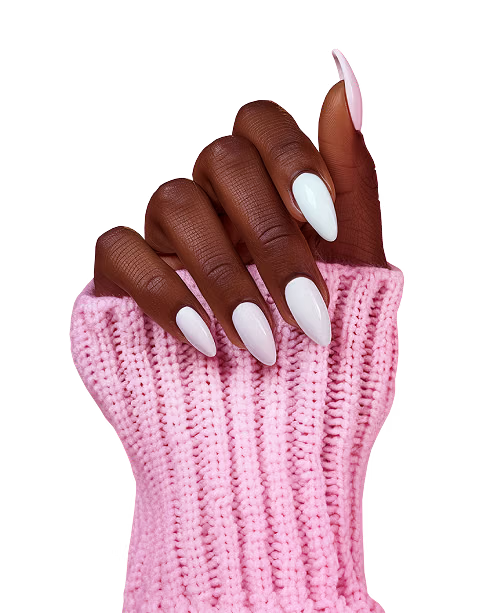
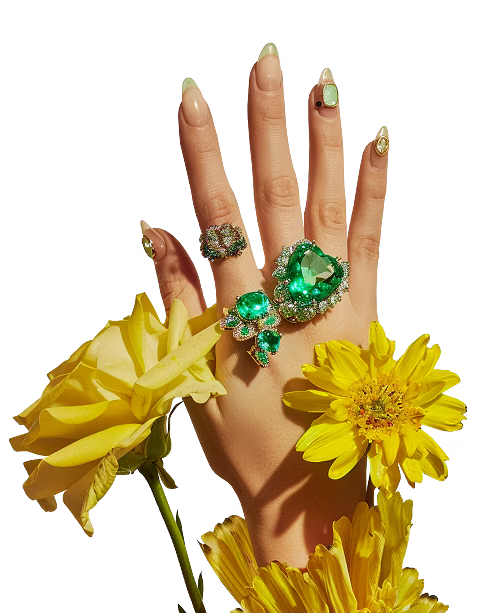

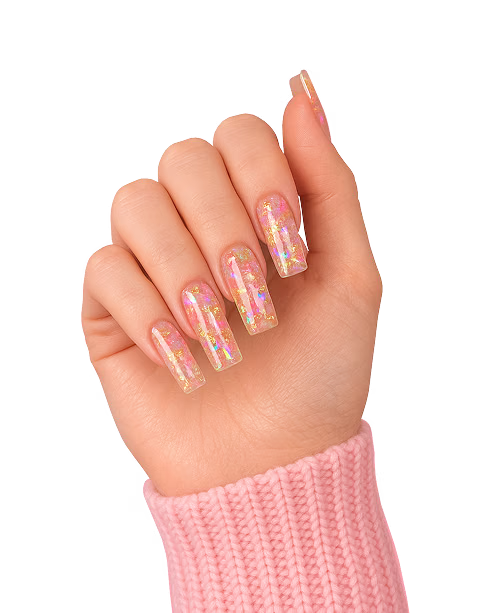
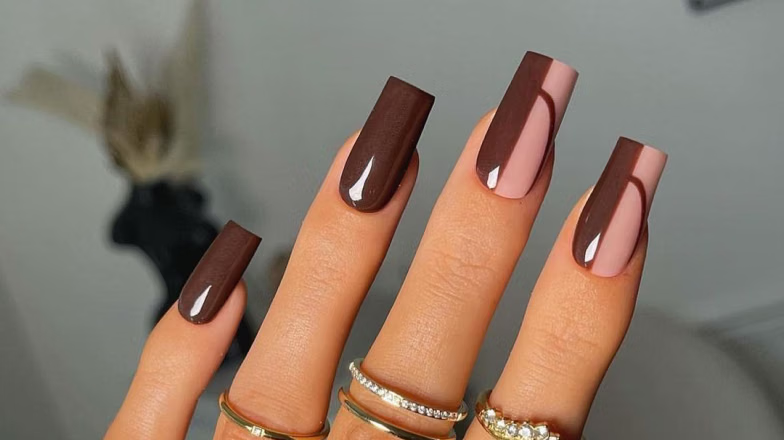 These two terms get mixed up constantly, and the confusion is understandable, since they sound like they're describing the same thing from opposite directions. Russian dry manicure refers to the preparation technique, meaning the dry, drill-based work on the nail base described above. Russian gel manicure means the same preparation, combined with a gel polish or builder gel finish. In practice, the two almost always go together.
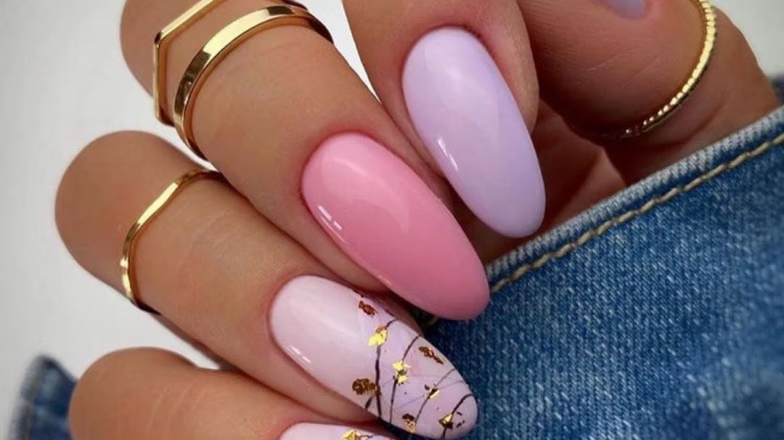 Long-lasting wear, up to 3–4 weeks. The precise preparation means the product adheres to the nail plate with minimal lifting at the edges. Chip-free color that holds through week three is realistic for most clients.