Protein Treatment for Hair: What It Is, Who Needs It, and What to Expect at It’s Beauty Salon
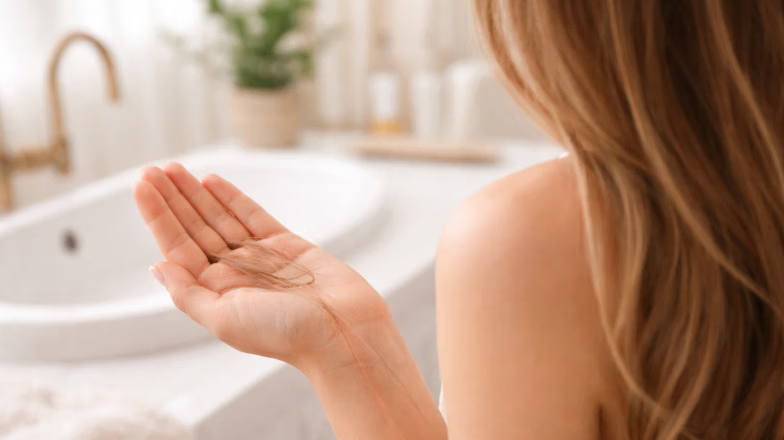
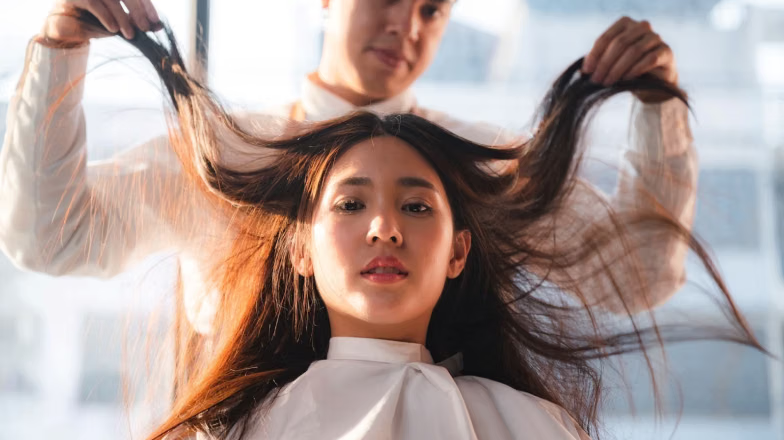
If your hair feels brittle after months of bleach and heat, or frizz takes over the moment you step outside in Dubai’s humidity, a protein treatment for hair could be what it needs. Weakened structure doesn't respond to regular conditioner, so it begs for structural repair.
A hair protein treatment replenishes what’s been stripped, reinforcing each strand from within so it behaves better, breaks less, and looks healthier. Here, we’ll cover how it works, who needs it, what to expect at It’s Beauty, and how it compares to other professional treatments.
What Is Protein Treatment for Hair?
A protein treatment for hair is a salon procedure that delivers a concentrated blend of hydrolyzed proteins, amino acids, and peptides directly into the hair shaft to repair structural damage and rebuild weakened strands. The word “hydrolyzed” means the proteins have been broken down into smaller molecules. They are small enough to actually penetrate the hair cuticle rather than just coat the surface.
The most common protein sources used in professional formulas include:
Keratin, the same protein that makes up the hair’s natural structure;
Wheat protein for strength and elasticity;
Silk protein for smoothness.
These three bond to damaged areas along the hair cuticle and cortex, filling gaps where the fiber has broken down.
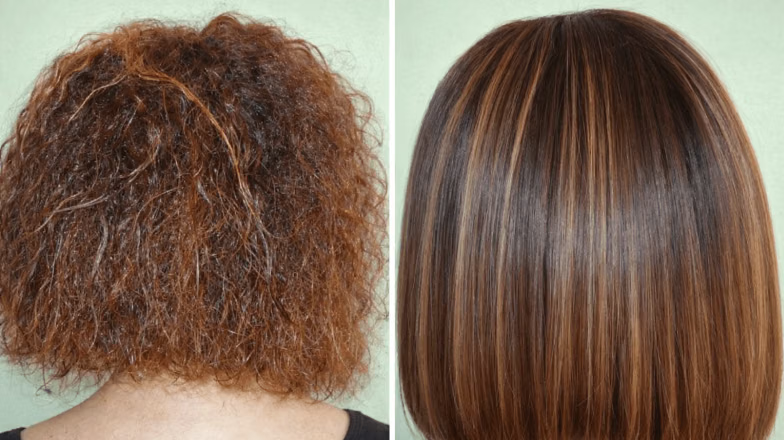
The result of the protein-based hair treatment is a strand that’s denser, more resilient, and better able to hold its shape through styling. It’s a structural repair that lasts until the treated portion of hair grows out or is cut. It addresses the structural integrity of the fiber itself. For that, it remains the right choice when hair is compromised, not just dry.
Benefits of Protein Treatment for Hair
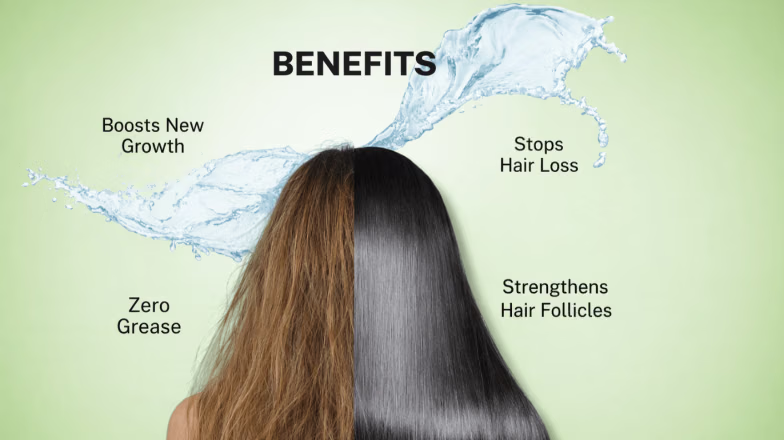
Hair that has lost protein behaves differently. It tangles more, snaps when brushed, and loses its shape quickly after styling. A professional protein treatment for hair benefits appears as a helpful tool. It addresses these issues at the structural level.
Stronger strands: Hydrolyzed proteins bond to weak points along the hair fiber, making each strand denser and more resistant to everyday stress.
Reduced breakage: After regaining structural integrity, they snap less during brushing, styling, and detangling.
Improved elasticity: Healthy hair stretches slightly when wet and springs back. Protein-treated hair recovers that flexibility, reducing the risk of snapping under tension.
Frizz reduction: When the cuticle is sealed and smooth, moisture from the air can’t enter and swell the shaft.
Enhanced shine: A smooth, closed cuticle reflects light more evenly, giving hair a visible glossiness after protein hair treatment.
Better protection from heat and chemicals: Reinforced strands hold up better through future salon services.
Easier detangling and day-to-day manageability: Hair protein treatment benefits hair that brushes through without snapping, one of the most immediate and practical differences.
Yes, a protein treatment for hair is good when the strands have lost structural integrity from chemical services, heat damage, or environmental stress. The key is identifying whether your hair is genuinely protein-deficient, or whether it needs moisture instead.
These signs may point to protein loss:
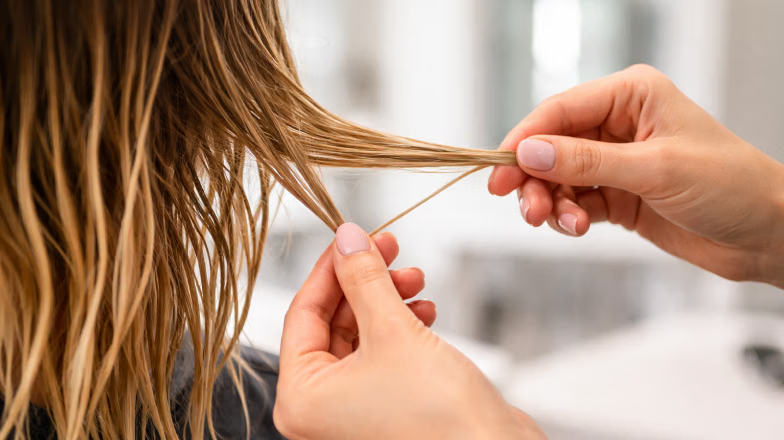
Hair stretches excessively when wet and doesn’t spring back or snaps immediately with no stretch at all;
Strands feel mushy or gummy when soaked;
Short broken hairs around the face and hairline, even without heat styling;
Hair feels spongy after lightening or bleaching;
Styles don’t hold, hair loses shape quickly after blow-drying or curling;
Tangles easily even after applying conditioner.
Protein treatments work especially well for hair colouring clients, particularly those who bleach regularly. They’re also a strong fit for brittle or fine strands that break easily, hair that’s been through frequent heat styling, and anyone whose hair feels dry and rough despite regular deep conditioning. Protein treatment is a gentler, texture-preserving option worth considering.
Protein Treatment vs Keratin vs Hair Botox
Protein treatments, keratin treatment, and hair botox all improve the condition and appearance of hair but they solve different problems. Choosing the right one depends on whether your priority is strength, smoothing, or deep moisture restoration.
Smooths and relaxes curl for a sleeker, straighter finish
Deep conditioning and frizz reduction with moisture restoration
How it works
Hydrolyzed proteins fill gaps in the cuticle and reinforce the strand
Keratin sealed with heat into the hair cuticle
Nourishing blend penetrates the shaft, smooths and coats the surface
Effect on curl
Preserves natural texture — no straightening
Relaxes curl significantly
Preserves natural curl, only smooths frizz
Repeat frequency
Every 4–6 weeks
Every 8–24 weeks
Every 2–4 months
Best for
Bleached, colored, weak, brittle hair
Frizzy, unruly hair when smoothing is the goal
Damaged hair that needs both moisture and shine
If your main concern is breakage and structural weakness, a protein treatment is the right starting point.
If you want to eliminate frizz and significantly reduce curl, keratin is the more targeted option.
If your hair is dry and lackluster but not severely damaged, hair botox provides moisture and shine without altering the hair’s natural texture.
Your stylist can assess the hair’s condition during a consultation and recommend the treatment that makes the most sense for your current state.
Side Effects of Protein Treatment and Protein Overload
Protein overload happens when hair receives more protein than it can absorb. It may happen from over-frequent treatments or stacking multiple protein-heavy products. The hair cuticle becomes too rigid, so hair turns stiff and dry.
Signs of protein overload include a stiff, straw-like texture that wasn’t there before.
Another one is when hair feels rough and dry to the touch, even right after washing. And you can also get an increased shedding or breakage despite the treatment.
To avoid overload: space sessions at 4–6 week intervals, balance protein treatments with regular moisture-focused sessions (a deep conditioning treatment in between works well), and get a strand assessment before each appointment.
At It’s Beauty Salon, stylists assess your hair condition before each session to ensure the treatment is appropriate. They can check the protein treatment for hair side effects. If moisture is what your hair needs that day, they’ll recommend accordingly.
Protein Treatment for Hair in Salon: What to Expect at It’s Beauty Salon
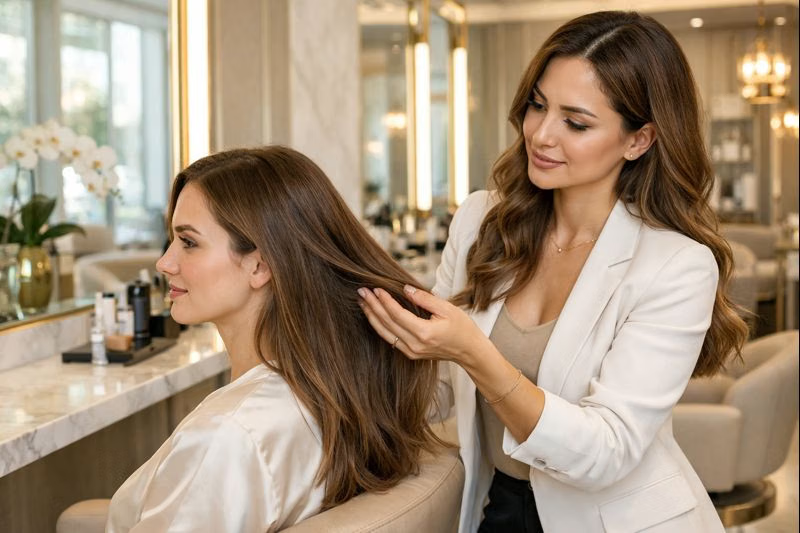
A protein treatment for hair in salon settings is more effective than at-home alternatives. The concentrations for hair protein treatment Dubai used are higher, the application is precise, and the stylist can target the most damaged sections of the hair fiber.
At It’s Beauty Salon, the process follows a structured protocol that usually runs 1.5 to 2 hours, depending on hair length and condition. You can find locations for protein treatment for hair Dubai at our 3 locations in Dubai (Dubai Internet City, DIFC, Dubai Business Bay) and at our locations in Abu Dhabi (Al Zahiyah, Al Raha Blvd).
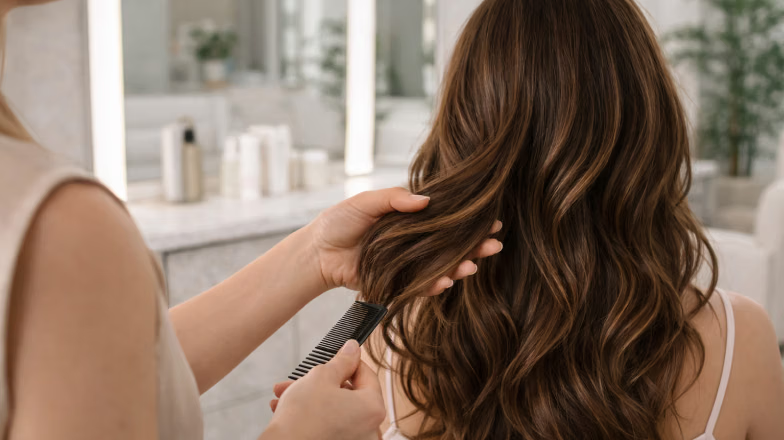
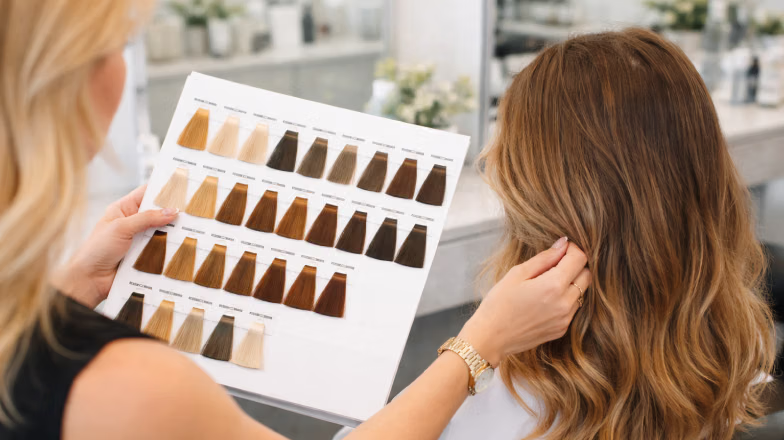
Consultation and strand check: Your stylist examines the hair’s current condition: elasticity, porosity, and the degree of damage. This determines which formula is most appropriate and whether a protein treatment is the right call.
Clarifying cleanse: A clarifying shampoo removes product buildup from the hair shaft so the treatment can penetrate properly.
Sectioning and application: The treatment is applied section by section, with extra attention to the ends and the most damaged areas. Formulas used include Davines protein care lines, Davines hair lamination product line (applied here as a professional brand protocol), Olaplex, and K18.
Processing under heat: Heat is applied to activate the formula and drive proteins deeper into the hair cuticle and cortex. Processing time varies based on the level of damage.
Rinse and conditioning step: The treatment is thoroughly rinsed and followed by a conditioning step to seal the cuticle, lock in the proteins, and restore softness.
Before the appointment, take a patch test. You can also have it done after your initial consultation visit, check with your consultant. It must be done before the protein treatment itself. Book a consultation at our hair salon in Dubai and your stylist will walk you through the right protocol and next steps.
Aftercare and How Often to Repeat
What you do in the weeks after a session has a major impact on how long the results hold. Dubai’s climate has a mix of heat, humidity, UV exposure, and chlorinated pools. It can accelerate protein loss, so a few consistent habits make a significant difference.
Take care of your hair with these steps:
Use a sulfate-free shampoo because sulfates strip protein bonds faster and undo the treatment more quickly;
Apply a hydrating mask weekly to maintain protein-moisture balance;
Protect hair from UV exposure with a leave-in product that includes UV filters;
Rinse hair with cool water after swimming in pools or the sea, and follow up with a scalp treatment if your scalp feels irritated from chlorine or salt;
Avoid hot tools above 180°C (360°F) in the days following treatment;
Limit chlorine and salt water exposure; if unavoidable, rinse immediately afterwards;
Avoid shampoos with harsh sulfates — they accelerate breakdown of the protein bonds.
As a general guideline, most clients repeat a protein treatment every 4–6 weeks. The exact interval depends on hair condition, how frequently it’s colored or heat-styled, and how well the aftercare routine is maintained.
FAQ
Results from a professional protein treatment hold for 4–6 weeks, after which the hair begins to show wear as the treated portion grows and the bonds gradually break down. Using sulfate-free products, reduced heat exposure, and weekly hydrating masks extend the results noticeably. Consistent aftercare matters more than in milder environments.
For most clients, every 4–6 weeks is the right interval. Going more often than recommended without a stylist’s assessment raises the risk of protein overload, which causes stiffness and dryness rather than improvement.
A protein treatment strengthens the hair’s internal structure by filling gaps in the cuticle with hydrolyzed proteins. It does not alter the hair’s natural texture or reduce curl. A keratin treatment, by contrast, deposits keratin into the cuticle and seals it with heat to significantly smooth and relax the hair’s texture. Protein treatments are repeated every few weeks; keratin treatments last several months. For breakage and structural weakness, protein is the right choice. For smoothing and frizz elimination, keratin is the choice.
Correctly applied protein treatment is safe for the vast majority of hair types. The main risk is protein overload from over-application, which leads to stiffness and increased brittleness. A patch test is recommended before your first session, particularly if you have a sensitive scalp or a history of reactions to salon products.
Yes. Colored and bleached hair is one of the main use cases for protein treatments. For recently bleached hair, the stylist will assess the level of damage before proceeding and may recommend a gentler formula or a preparatory conditioning step first.
The wet stretch test is a simple starting point: take a single wet strand and gently pull it. If it stretches a lot and doesn’t return to its original length, or snaps with minimal elasticity, the hair likely needs protein. If it stretches slightly and springs back but still feels rough or dry, moisture is the primary need.
At-home protein products can help maintain results between salon visits, but they use lower concentrations than professional formulas and don’t replicate the precision of a salon application. A senior stylist monitors for protein overload and adjusts the formula between sessions, which isn’t possible with at-home kits.



 If your hair feels brittle after months of bleach and heat, or frizz takes over the moment you step outside in Dubai’s humidity, a protein treatment for hair could be what it needs. Weakened structure doesn't respond to regular conditioner, so it begs for structural repair.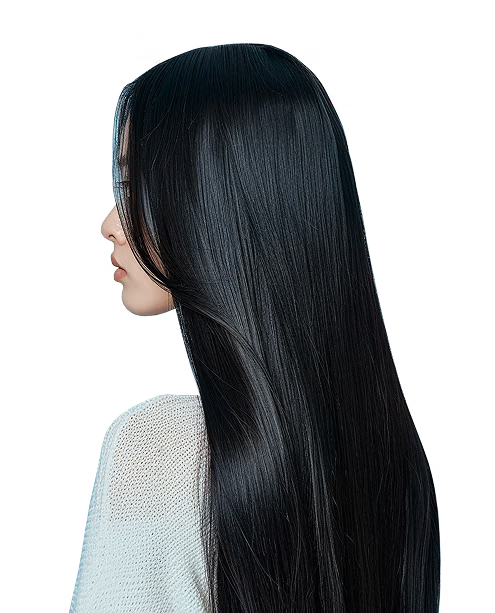
 At It’s Beauty Salon, the process follows a structured protocol that usually runs 1.5 to 2 hours, depending on hair length and condition. You can find locations for protein treatment for hair Dubai at our 3 locations in Dubai (Dubai Internet City, DIFC, Dubai Business Bay) and at our locations in Abu Dhabi (Al Zahiyah, Al Raha Blvd).